
Article: Winter Face Moisturizer: What to Look For When Skin Feels Dry
Winter Face Moisturizer: What to Look For When Skin Feels Dry
THE JOYFUL JOURNEY / WINTER SKIN, MADE SIMPLE
When your face feels tight after the first cold snap, your moisturizer's texture and ingredients matter. Here is what to look for in a winter face cream.
Sometimes the first sign of winter isn't snow. It's how your cheeks feel halfway through the day. Your usual routine still feels lovely when you apply it, but by lunchtime you want a little more comfort.
If you're searching for a winter face moisturizer for dry skin, it helps to know what makes a cream feel satisfying—and how that cream works with your other skincare layers. The answer is more useful than another list of product rankings.
What should you look for in a winter face moisturizer?
Look for a cream you enjoy applying consistently, with a formula that brings together ingredients to hydrate and soften the skin. Winter's cold air and indoor heating can make dryness more noticeable, so a more cushioned texture may feel especially good at this time of year.
Three ingredient roles are particularly helpful to understand:
- Humectants such as glycerin help the skin's outer layers hold water.
- Emollients help skin feel smoother and softer, especially where it feels rough.
- Ingredients that reduce moisture loss can contribute to the comfort a cream provides after cleansing.
A well-formulated cream can bring several of these roles together. You don't have to choose based only on whether its texture feels light or rich; how the complete formula wears on your skin matters.
Winter face cream versus lotion: why texture matters
Face lotions are often designed for a lighter feel, while creams generally offer a more cushioned finish. When the air becomes drier, that richer feeling can be welcome, particularly across the cheeks and other areas that tend to feel tight.
One reason winter skincare can feel different is that indoor heating often lowers relative humidity. A cream with water-binding and conditioning ingredients can add welcome softness and comfort after cleansing, especially when indoor air feels dry.

Where Glow Daily fits into a cold-weather routine
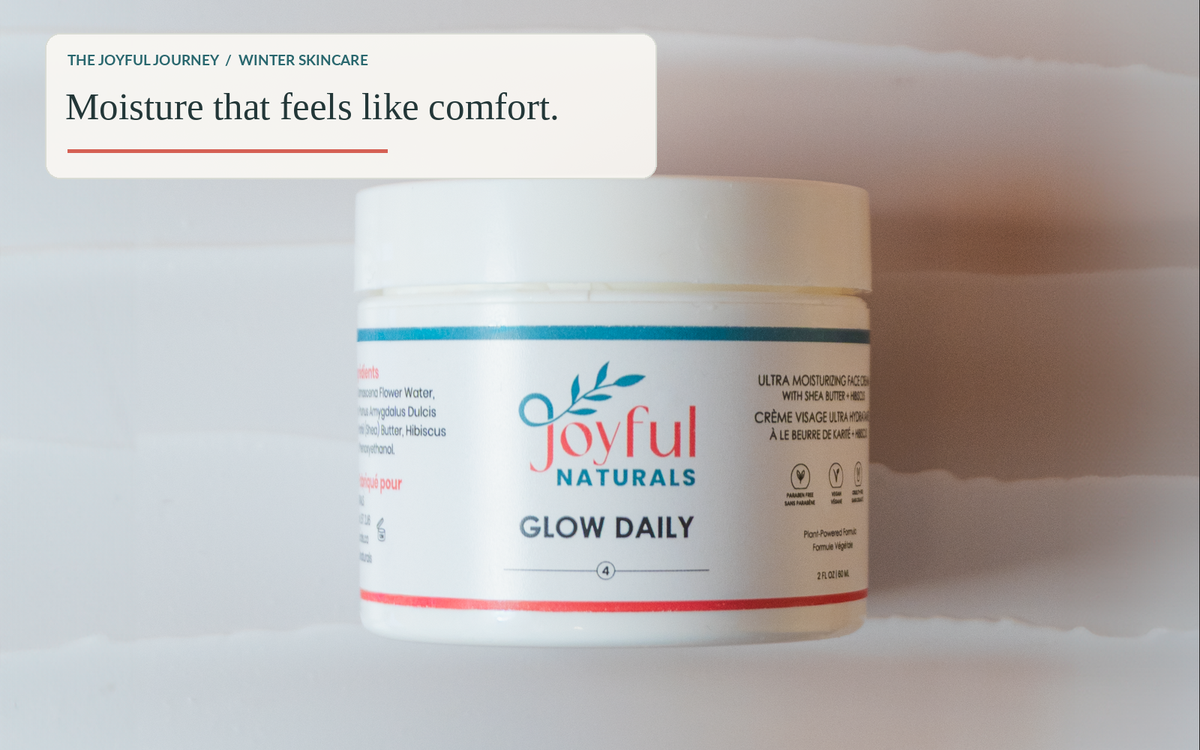
Glow Daily is Joyful Naturals' face cream, designed for the moisturizing step after serum. Glycerin offers water-binding hydration, while shea butter contributes to its soft, cushioned feel. The result is a rich but approachable cream layer that fits naturally into a colder-weather routine.
Apply it after a hydrating serum, according to the directions for the products you use. The aim is simple: comfortable skin that feels moisturized rather than tight after you finish your routine.
Should you add a serum and face oil in winter?
They bring different qualities to the experience. A hydrating serum provides a lightweight, water-binding layer; a cream adds moisturizing comfort; and a botanical face oil can give the final step a silky, conditioned finish.
In the Joyful Naturals routine, Glow Getter → Glow Daily → Nourish & Glow is the order for those three textures. This sequence is especially appealing when the colder months make you appreciate a little more softness at the end of your routine.
For the full order, including cleansing and toner, see our five-step winter skincare routine.
When should you apply face moisturizer in winter?
Moisturizing after cleansing is a good habit year-round. Pat your face gently after washing and apply your hydrating layers while the skin is still slightly damp, following product directions. Very hot showers and harsh scrubbing can also contribute to the tight feeling you are trying to avoid.
If you notice that your moisturizer feels comfortable in the morning but less satisfying later, take a look at the complete routine—not just the cream. Our article on why skin can feel dry again by afternoon breaks down the different jobs of a cleanser, serum, moisturizer and face oil.
Winter moisturizer questions, answered
Is a thicker moisturizer always better for winter?
Not automatically. Many people enjoy a richer cream in dry weather, but comfort depends on the full formulation, how it feels on your face and the products you pair it with. A satisfying winter cream should feel pleasant enough to use consistently.
Can I apply face oil over moisturizer?
Yes. In a typical hydrating routine, apply serum, then moisturizer, and finish with a few drops of face oil. That gives each texture a clear place in the sequence.
Can indoor heating make my face feel drier?
It can. Heating cold outdoor air without adding moisture often lowers relative humidity indoors, which can contribute to dry-feeling skin. Adjusting your skincare layers and paying attention to indoor humidity can both help.

The Five-Step Glow Routine
Pair Glow Daily with gentle cleansing, a refreshing mist, lightweight serum and Nourish & Glow's soft botanical finish—all in one easy-to-follow set.
See the complete five-step setWinter skincare doesn't need to feel like a new puzzle every time the temperature changes. A moisturizing cream you love, supported by complementary layers, can make a cold morning feel a little more comfortable.


