
Article: Jojoba Oil: The Plant Wax Behind a Softer Finish
Jojoba Oil: The Plant Wax Behind a Softer Finish
THE JOYFUL JOURNEY / INGREDIENT SPOTLIGHT
It looks like oil, pours like oil and feels lovely on skin. But jojoba has a different chemistry from most botanical oils—and that makes it worth understanding.
Pick up a bottle of jojoba oil and you'd be forgiven for thinking it's like every other botanical oil. It's golden, it pours, and it leaves skin with a soft sheen.
Jojoba is often called an oil, and it's easy to see why. The golden liquid glides across skin and leaves a smooth, conditioned feel that makes it a natural choice for facial oils.
The fascinating part is inside the liquid: unlike many seed oils, jojoba is made predominantly of wax esters. Those molecules help explain why the ingredient is valued for its spread, texture and distinctive place in botanical skincare.
The botanical liquid wax with an unusual structure
The jojoba plant (Simmondsia chinensis) produces seeds containing a fluid, golden material. Its main components are wax esters formed from long-chain fatty acids and fatty alcohols, rather than the triglycerides common in many other plant oils.
Because those wax esters remain fluid at ordinary room temperatures, jojoba offers the slip of an oil with a different molecular structure. It's a small piece of chemistry that makes the ingredient especially interesting to formulators.

Some wax esters are also found in human sebum, the natural oily substance produced by our skin. That's the origin of the often-repeated comparison between jojoba and skin's own oils. The comparison is useful, but only up to a point: sebum is a complex mixture, and jojoba is not an exact copy.
The skin-softening benefits of jojoba
Jojoba is an emollient, meaning it helps skin feel softer and smoother. It also contributes slip to formulas, making a face oil pleasant to massage over skin without necessarily leaving a heavy finish.
These qualities can be especially welcome when cheeks feel rough or dry after cleansing. A hydrating serum or moisturizer may contribute water-binding ingredients, while jojoba brings its own conditioning feel to the finishing layer.
A well-designed skincare routine may combine a water-based hydrating step with emollients. That's the practical difference between an oil and a serum, which we explain in our face oil versus serum comparison.

Jojoba and skin's natural oils: an interesting connection
Human sebum contains several types of lipids, including wax esters. That creates an intriguing point of similarity with jojoba's composition and helps explain why the two are sometimes compared.
It's an interesting comparison, though not evidence that applying jojoba makes oil glands produce less sebum. Oil production depends on several biological factors, and a cosmetic oil shouldn't be expected to regulate it automatically.
For some people with combination or oily-feeling skin, the important consideration is simpler: whether the finished formula feels light enough, spreads comfortably and agrees with their skin.
Does jojoba oil clog pores?
Jojoba's fluid wax esters and smooth feel make it an appealing ingredient in face oils, but no botanical ingredient can guarantee how every person's pores will respond. A comedogenic rating is a rough historical reference, not a dependable prediction of whether jojoba—or a finished oil blend—will cause breakouts on your face.
For skin that's prone to clogged pores, start with a small amount of a new formula and notice how it feels over time. The complete blend matters, not just its jojoba content.
Choosing the right amount for your skin
A face oil doesn't have to feel heavy. Many people enjoy starting with just a few drops, applied after their hydrating steps, and adjusting the amount to suit drier or oilier areas.
If you're prone to breakouts, introduce a new formula gradually and pay attention to your response. There is no single pore-clogging score that predicts everyone's experience; our guide to face oil and acne takes a closer look at why.
Why jojoba is part of Nourish & Glow
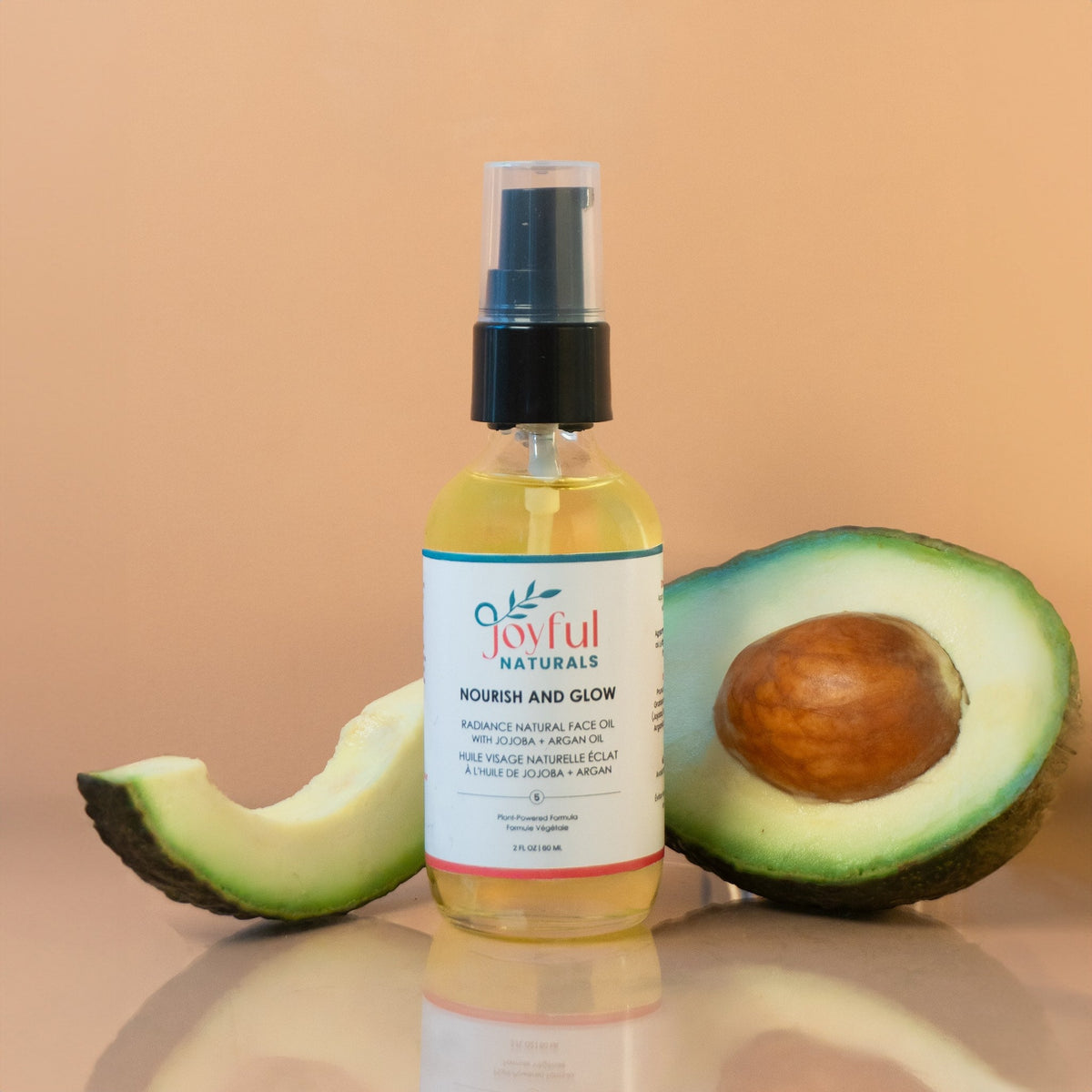
In Joyful Naturals Nourish & Glow, jojoba contributes silky slip to a blend of conditioning botanical oils. The result is a soft, smooth finish that pairs beautifully with a hydrating step.
A few drops make an easy final step over serum or cream, leaving skin with a smooth, conditioned-looking glow. To understand how jojoba complements the other botanical oils, see our jojoba, hemp seed and avocado oil comparison.

Enjoying jojoba in a simple routine
After cleansing and applying any serum or moisturizer you enjoy, an oil blend can be a final step for softness and slip. Begin with a small amount; a few drops often spread farther than you expect.
You might enjoy an oil every day or reserve it for times when your skin wants a richer finish. Jojoba can fit into a flexible routine because its value is in how the finished formula feels.

Nourish & Glow · Face Oil
A silky botanical face-oil blend featuring jojoba for a smooth, conditioning finish. Discover how it fits into your skincare routine.
Explore Nourish & GlowJojoba's distinctive wax-esters and emollient qualities give it a meaningful place in skincare. It's a botanical ingredient worth appreciating for the comfort, softness and elegant texture it can contribute.


